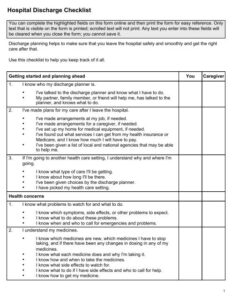
Being a case manager is a bit like being a conductor for a very complex orchestra where every musician is in a different room. You are constantly balancing the needs of the patient, the requirements of the insurance companies, and the availability of resources at the next level of care. It can be overwhelming to keep track of every single detail, which is why having a reliable discharge checklist template for case managers is such a game changer for day to day operations. Without a clear plan, things can easily fall through the cracks, leading to unnecessary stress for both the clinical staff and the families involved in the transition.
When a patient is ready to leave the hospital or a care facility, the clock starts ticking and the pressure builds. There are dozens of moving parts to coordinate, from arranging transportation to ensuring that the home environment is safe and equipped with the necessary medical supplies. A well structured approach ensures that no detail is overlooked, allowing you to focus on the human side of care rather than just the administrative hurdles. By standardizing the way you handle these transitions, you can provide a higher level of service while protecting yourself from the burnout that often comes with high volume caseloads.
The beauty of a systematic approach is that it creates a sense of calm in what is traditionally a very chaotic environment. It allows you to move through your day with the confidence that you have covered all the bases for every individual under your supervision. Instead of relying on memory or scribbled notes on a notepad, you have a solid framework that guides you through the process from start to finish. This not only benefits you as a professional but also significantly improves the outcomes for the patients who are counting on you to help them navigate their recovery journey safely.
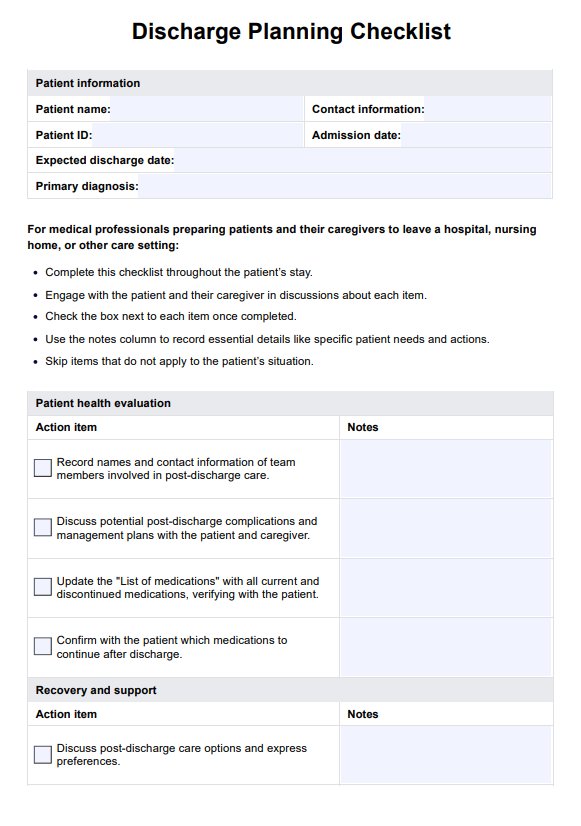
The Critical Role of Structure in Patient Transitions
One of the most significant challenges in healthcare today is the high rate of hospital readmissions. Many times, these readmissions happen not because the initial treatment failed, but because the transition home was poorly managed. When a patient leaves the facility without a clear understanding of their medications or without the proper support at home, the likelihood of them ending up back in the emergency room increases dramatically. This is why having a standardized discharge checklist template for case managers is not just a matter of convenience but a vital component of patient safety and long term health.
Consistency is the foundation of any high quality care program. When every case manager in an organization uses the same set of criteria and the same workflow, it creates a predictable environment for both the staff and the patients. This consistency helps to eliminate human error, which is especially important during busy shifts when the workload might feel unmanageable. Having a documented process means that if a colleague needs to step in and help with a case, they can easily see exactly what has been completed and what still needs attention.
Improving Communication with Families
Families are often the primary caregivers once a patient leaves a professional facility, and they are usually feeling quite anxious about the transition. They may feel overwhelmed by the instructions given to them by doctors and nurses in the final hours before departure. By using a structured format, you can present information to the family in a way that is easy to digest and follow. This helps to build trust and ensures that the caregivers feel empowered to take over the responsibilities once the patient is back in their home environment.
Another major benefit of a structured system is the improvement in interdisciplinary communication. A case manager acts as the hub of a wheel, connecting doctors, physical therapists, social workers, and outside vendors. When everyone knows what information is required for a successful discharge, the entire team can work more efficiently. It reduces the number of follow up phone calls and emails that take up so much valuable time during the day, allowing the team to focus on providing actual care to those in need.
Reducing Administrative Fatigue
We often underestimate the mental energy it takes to keep track of dozens of small tasks simultaneously. Case managers are frequently interrupted by phone calls, pages, and urgent requests, which makes it very easy to lose your place in a complex process. A written guide serves as an external memory bank, freeing up your brain to handle the more complex problem solving tasks that require your full attention. It provides a sense of accomplishment as you check off items, which can be a great morale booster in a high pressure job.
Ultimately, the goal is to create a seamless experience for the person receiving care. They should feel like their transition was well planned and that all their needs were anticipated before they even walked out the door. When the administrative side of the job is handled efficiently through a clear system, you have more time to spend talking to the patient, answering their questions, and offering the emotional support that is so often missing in modern healthcare. This human touch is what makes a great case manager stand out from the rest.
Core Components for a Successful Discharge Plan
To make your process as effective as possible, you need to ensure that the most critical areas are addressed every single time. This includes a thorough review of medications, ensuring that the patient has a way to get their prescriptions filled and that they understand how to take them. You also need to verify that any necessary durable medical equipment, such as oxygen or walkers, has been ordered and delivered. Beyond the physical items, you must coordinate follow up appointments with primary care physicians or specialists so that the continuum of care is not broken once the patient leaves your sight.
Documentation is another essential piece of the puzzle that cannot be ignored. You need to ensure that all discharge summaries and clinical notes are sent to the appropriate providers in a timely manner. This ensures that the next person in the chain of care has all the information they need to provide effective treatment. It is also helpful to provide a list of red flags or warning signs to the patient and their family so they know exactly when they should call a doctor or return to the hospital if things start to take a turn for the worse.
Customizing your workflow to fit the specific needs of your facility or your patient population is also vital. A checklist for a geriatric patient might look very different from one designed for a pediatric patient or someone recovering from a major surgical procedure. By taking the time to refine your tools, you ensure that they remain relevant and useful rather than just another piece of paperwork to fill out. The more specific and tailored your approach is, the more likely it is to produce the positive outcomes you are striving for in your professional practice.
As you move forward in your career as a case manager, remember that your role is the bridge between the clinical world and the real world. Every person you help transition back to their life is a success story that you helped write. By using the right tools and maintaining a structured approach, you make it possible for those patients to succeed in their recovery and for the healthcare system to function as it was intended. It might seem like a small thing, but the order and clarity you bring to the process make a world of difference to everyone involved.
The work you do is essential, and while it can be demanding, it is also incredibly rewarding to see a patient return home safely and stay there. Stay organized, keep your focus on the details, and never underestimate the power of a well prepared plan. Your dedication to excellence in discharge planning is one of the most important factors in modern healthcare, and having the right system in place is the best way to ensure that your hard work translates into the best possible results for those in your care.